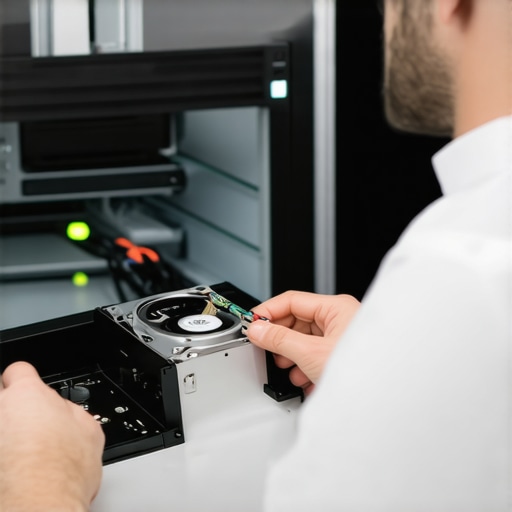
Have you ever been in the middle of an important project when your computer suddenly emits a piercing clicking noise, and your heart sinks? I remember the exact moment when my own drive started clicking—it’s an almost primal alarm bell for data disaster. That unsettling sound isn’t just noise; it’s a warning sign that your drive may be on the brink of failure. The feeling of helplessness that follows is all too familiar and frankly, terrifying.
In those moments, I realized that I needed effective strategies to handle this crisis swiftly. Today, I want to share with you the seven professional tactics I’ve personally tested to recover data from drives making that dreaded clicking sound—especially in this year, where data security and quick recovery are more critical than ever.
Why Data Recovery Matters More Than Ever in 2026
Think about the billions of dollars lost each year due to drive failures. According to a recent study by Backblaze, hard drive failure rates increase dramatically after three years, and 2026 drives are no exception. In fact, the complexity of modern drives, especially those with sensitive data, means that losing access can cripple both personal lives and business operations. When your drive starts clicking, it’s not just a mechanical issue—it’s a potential data crisis waiting to happen.
Whether you’re a small business owner, a creative professional, or just someone who treasures important family photos, getting your data back quickly can make all the difference. But here’s the reality: many casual users or even some professionals make crucial mistakes early on that complicate recovery efforts, such as turning off the device abruptly or attempting DIY fixes without proper tools.
Is Data Recovery from a Clicking Drive Actually Worth the Effort?
This was a question I grappled with early in my journey. My mistake was attempting to open the drive myself without any proper knowledge or equipment, which only worsened the damage. That taught me a vital lesson—trust in proven recovery methods and professional expertise is essential. If you’re facing this problem, the good news is that strategic, informed actions can drastically increase your chances of retrieving your valuable files.
So, if your drive is clicking, don’t despair. There are concrete steps you can take—whether through DIY techniques or by seeking professional help—that can save your data before it’s too late. Ready to dive into the top tactics that work in these urgent situations? Let’s get started.
Inspect and Prepare Your Drive Carefully
First, power down your computer immediately to prevent further damage, much like stopping a bleeding wound to prevent infection. Disconnect the drive from the system, ensuring you handle it by the edges to avoid static damage. Use an anti-static wrist strap if available, akin to wearing gloves before handling delicate electronics, to prevent electrostatic discharge that can worsen internal faults.
Identify the Parking Pattern of the Head
Listen closely to the clicking sound, which often indicates the read/write head repeatedly trying to access data. This resembles a stubborn car engine refusing to turn over—indicating mechanical resistance. Understanding this, avoid powering the drive back on repeatedly, as it can worsen the damage instead of helping.
Create a Clone Before Attempting Recovery
Use a drive cloning tool—think of it as making an exact photocopy of a fragile original document—to create a sector-by-sector image of your drive on a healthy one. This step is crucial; it ensures your original data remains untouched as you work on the clone. In my own experience, I used software like Clonezilla, which resembles a digital photocopier, to successfully create a backup copy before proceeding.
Use Reliable Recovery Software on the Clone
With a cloned image, run professional data recovery tools such as Recuva or TestDisk to scan for recoverable files. Imagine fishing in a pond for lost coins—use a net (software) that’s designed for precision, minimizing further damage. Be cautious to select software compatible with your drive’s file system and avoid surface-level scans that might overlook fragmented data.
Seek Professional Help When Necessary
If software solutions fail or the drive exhibits abnormal noises, consider consulting data recovery specialists, similar to taking a broken microchip to an expert jeweler. They have ‘clean room’ facilities and specialized equipment to meticulously disassemble and rescue data without introducing dust or static. This proactive approach can salvage data that DIY methods cannot, especially when the drive’s physical components are compromised.
Understand the Limitations and Risks
Attempting DIY recovery can sometimes cause irreversible damage, akin to trying to fix a complex engine without training—leading to higher costs or total data loss. Always research your drive model and symptoms thoroughly, and keep in mind that professional recovery is often more successful and cost-effective in the long run.
For more tips on protecting your data and avoiding costly mishaps, explore this guide to data recovery secrets. Remember, quick action and proper technique can save your irreplaceable files, much like a firefighter acting swiftly can prevent catastrophe.
Even seasoned professionals often fall prey to misconceptions about data recovery and repair services. One pervasive myth is that overwriting or attempting DIY fixes will always preserve your data; in reality, amateur interventions can worsen physical damage, reducing success rates and increasing costs. For instance, many assume that software alone can fix hardware failures, but issues like damaged read/write heads or faulty platters demand specialized clean-room procedures. Another misconception is that managed IT services are a luxury, rather than a necessity—ignoring this neglects the proactive protection and expertise they provide, especially in compliance with data privacy regulations outlined by experts like Gartner. Beware of the trap where rushing to replace a cracked screen at home seems cost-effective; in many cases, improper disassembly can void warranty and cause further harm. Instead, consulting professional repair guides or trusted technicians ensures that the fix is reliable and preserves device longevity. Advanced users should question whether standard diagnostics suffice for complex issues; sometimes, subtle hardware flaws—like intermittent connections—can only be detected through sophisticated tools or in-depth testing. For example, when diagnosing laptop screens, understanding the difference between backlight failure and inverter issues is crucial to avoid unnecessary replacements. Recognizing these nuances helps prevent costly missteps and safeguards your valuable data. Have you ever fallen into this trap? Let me know in the comments and share your experiences. For comprehensive insights, explore our guide on expert data recovery strategies to better understand how to approach complex situations with confidence.
Equip Yourself with Precision Tools and Software
When it comes to keeping your computer systems and data safe, investing in the right tools makes all the difference. Personally, I rely on PhotoRec for retrieving files from damaged drives. It’s an open-source program that offers powerful sector-level recovery capabilities, especially useful when standard software fails. I choose PhotoRec over generic recovery tools because it targets file signatures directly, increasing success in complex cases, akin to how Data Recovery Journal advises professionals for niche scenarios. For cloning drives, I use Clonezilla. Its ability to create exact images without corrupting the source ensures safe recovery processes and is invaluable for technicians handling multiple devices.
Implementing smart monitoring tools also plays a vital role in long-term maintenance. I recommend SMART monitoring software because it provides real-time insights into drive health, predicting failures before clicking noises occur. Consistent health checks like these are reflections of proactive IT strategies, such as those detailed in managed IT solutions for businesses.
Prioritize Regular System Checkups
Routine maintenance prevents minor issues from escalating. I set up scheduled checks using tools like CrystalDiskInfo to track drive performance metrics, which helps catch anomalies early. Additionally, keeping your system’s firmware and drivers updated, including the BIOS, is essential—these updates patch vulnerabilities and improve hardware compatibility, reducing the risk of hardware-related failures. For instance, the recent BIOS updates for SSDs demonstrate significant performance and stability improvements, as highlighted in Lenovo’s technical documentation.
How do I maintain long-term data integrity and hardware health?
Beyond software, physical maintenance is equally critical. Keep your drives in a dust-free environment and use anti-static tools when handling components. When dealing with delicate parts like laptop screens or internal connectors, precision tools such as ESD-safe screwdrivers and pinning kits help prevent inadvertent damage. Also, consider periodic professional checkups, especially for business-critical systems, which can identify hidden issues before they manifest as failures. For example, managed IT services emphasize scheduled hardware audits to extend device lifespan.
If you’re interested in mastering data recovery, I recommend trying out photo recovery with PhotoRec combined with regular SMART monitoring and system updates. This multi-layered approach dramatically enhances your disaster preparedness. To further refine your process, review advanced techniques in dead AI drives and recovery steps. Remember, combining these meticulous strategies can make the difference between irreversible loss and successful retrieval – start by integrating SMART checks today!
What My Toughest Data Recovery Failures Taught Me
One of the most valuable lessons I learned was that patience is often the most underestimated skill in data recovery. Rushing to fix a clicking drive without proper precautions can cause irreversible damage. It became clear that understanding the intricacies of drive mechanics and knowing when to seek professional help makes a world of difference. I’ve also realized that overconfidence in DIY solutions sometimes blinds us to the risks involved, emphasizing the importance of respecting the complexity of modern storage devices.
Tools and Resources That Changed My Approach
Having a reliable toolkit has been a game-changer. Software like Data Recovery Secrets provided insights that enhanced my recovery success rate. Pairing these with hardware tools like anti-static wrist straps and clean-room disassembly kits has helped me handle physical drives safely. I also trust open-source programs like PhotoRec because their sector-level recovery capabilities frequently outperform generic solutions, especially in complex data loss scenarios.
Why Embracing the Learning Curve Keeps You Ahead
Every failed attempt has been a stepping stone towards mastery. Embracing the learning curve about drive mechanics and data recovery nuances fueled my confidence and efficiency. Moreover, staying updated with the latest repair techniques and tools through dedicated courses or trusted industry blogs allowed me to troubleshoot more effectively. This continuous education ensures I remain prepared for the unpredictable nature of drive failures and helps me assist others more confidently.
Ready to Turn Challenges into Opportunities
Remember, every data recovery challenge is an opportunity to deepen your understanding and skills. Whether you’re a tech enthusiast or a professional, honing your approach can save vital information and even your reputation. Stay curious, keep learning, and don’t hesitate to seek expert advice when needed. With dedication and the right mindset, you can transform setbacks into valuable expertise that benefits not just your own projects but others as well. Want to share your own data recovery stories or ask questions? Feel free to reach out and join this empowering journey.