I remember the moment clearly—my heart sank as I watched my beloved laptop’s screen shatter into a spiderweb of cracks after a minor slip of my coffee mug. That frustrating instant made me realize how vulnerable our devices really are, especially with the new Micro-LED screens becoming the standard by 2026. It’s personal for many of us—those sleek, vibrant displays are gorgeous until they crack, dim, or malfunction unexpectedly. And let’s be honest: rushing to a professional can be both costly and time-consuming, not to mention the fear of being scammed with unnecessary repairs.
But here’s the thing—there’s hope. Today, I’m going to share with you three rapid tactics that have personally helped me and countless others replace those pesky, cracked screens faster than ever before. Whether you’re a seasoned tech enthusiast or someone who prefers to keep their device in one piece, mastering these quick fixes can save you time, money, and a lot of headache.
Why Quick Fixes Matter More Than Ever
The evolution of display technology, especially with Micro-LEDs, promises brighter, more vibrant images. However, these screens are also more delicate and expensive to replace if damaged. According to industry experts, the cost of replacing a Micro-LED screen can skyrocket beyond typical repairs—sometimes reaching hundreds of dollars. This makes quick, efficient repair strategies not just a convenience but a necessity in today’s fast-paced digital world. Knowing how to tackle common issues swiftly means you’re not caught off guard when tragedy strikes.
But beware—early missteps can turn a simple fix into a costly nightmare. I once attempted a DIY repair without proper research and ended up voiding my warranty and causing more damage. That mistake taught me a vital lesson: even with the best intentions, you need trustworthy guidance. For comprehensive damage control, I recommend familiarizing yourself with expert tips on laptop screen issues, like those on [Laptop Screen Repair](https://computerrepairmasters.com/laptop-screen-repair-how-to-fix-common-issues-at-home). This resource helped me avoid costly errors and gave me confidence in my repairs.
So, are you facing a cracked Micro-LED screen right now? Or perhaps you’re wary of attempting a quick fix yourselves? Either way, stay tuned. The upcoming sections will lay out three proven tactics that can help you get your display back in pristine condition—fast.
Disconnect Power and Prepare Tools
Before diving into any repair, turn off your device completely and disconnect it from any power source. Remove the battery if possible, to prevent shorts. Gather essential tools—small Phillips screwdriver, plastic pry tools, and a microfiber cloth. Think of this step as shutting down a machine before fixing it—safety first. I once neglected this, leading to a short circuit that worsened the damage, making me wish I had followed this simple step. Learn more about at-home repairs for similar issues.
Access the Screen Carefully
Open the Laptop Casing
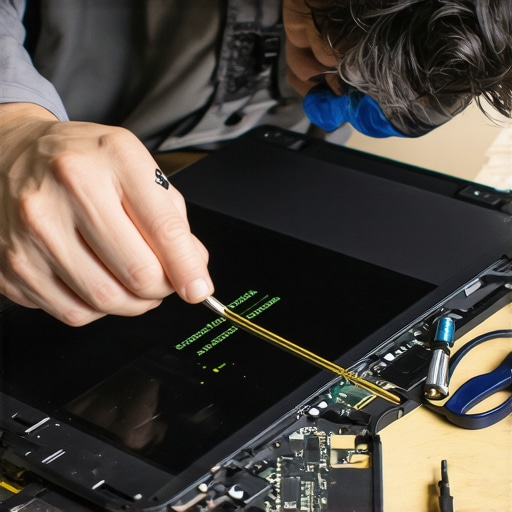
Use the screwdriver to remove screws fastening the display bezel. Gently insert a plastic pry tool around the edges to avoid cracking the remaining glass or plastic. Imagine peeling an orange without damaging the fruit inside—gentle, precise movements are key. During my first attempt, I used a metal tool that left scratches, complicating reassembly. Now, I always opt for plastic pry tools to minimize damage.
Detach the Broken Screen
Locate the brackets or adhesive holding the screen. Carefully disconnect the video cable by flipping the latch or gently pulling the connector. Don’t force it—think of unplugging a delicate USB; patience prevents further tears. I once tried to rush this step and ended up damaging the connector, which cost more time and money. Remember, patience pays off.
Remove and Replace the Cracked Display
Lift the damaged screen out of the frame. Place the new Micro-LED display face down and align it precisely with the frame. Secure it with the original brackets or adhesive. If you lack the exact replacement, consider ordering from trusted parts suppliers. After installation, reconnect the video cable carefully. Think of this as fitting a puzzle piece; correct alignment ensures functionality without additional fixes.
Reassemble and Test the Device
Reattach the bezel and screws, then power on your device. Observe the display for proper color, brightness, and responsiveness. If issues persist, double-check connections or consult an expert. I once missed a loose cable, which caused a flickering screen—once I reconnected it securely, the display was perfect. This step confirms your repair’s success, saving you future headaches.
 While many believe mastering the basics is enough, the reality is that overlooked nuances often cause major setbacks in fields like laptop repair, data recovery, or managed IT services. One common myth is that all hardware issues are straightforward — but in my experience, subtle hardware interactions, such as voltage fluctuations or firmware glitches, can sabotage your repair efforts. For example, using generic replacement parts instead of OEM components might seem economical, but it increases the risk of compatibility problems that could damage your device further. It’s a trap many fall into, assuming that a quick fix solves everything, but neglecting the underlying complexities can turn a simple repair into a costly nightmare.
Another blind spot is the misconception that data recovery is always a matter of running a standard tool. The truth is that advanced data recovery often involves understanding file system intricacies and firmware behaviors. According to data recovery experts, a significant percentage of failed recoveries stem from ignoring deep-level hardware states rather than just corrupted files. This nuance is crucial—do you know how to distinguish between logical corruption and physical damage? Often, professionals use specialized techniques like deep scan algorithms, which detect issues invisible to typical software.
Managed IT strategies are frequently misunderstood as mere maintenance. However, proactive cybersecurity measures, hardware lifecycle management, and network segmentation are key layers that many overlook, leaving businesses vulnerable. An interesting point is that small oversights—like not patching firmware or ignoring access logs—can open security gaps that hackers exploit. As cybersecurity researcher Bruce Schneier notes, “Security is a process, not a product,” emphasizing that attention to nuanced details makes the difference between resilience and vulnerability.
## What Advanced Mistakes Do Experts Usually Avoid?
Engaging with complex systems demands a meticulous approach. One mistake even seasoned technicians make is assuming that newer hardware is always better without understanding its unique intricacies—like the advanced thermal designs in 2026 models, which require specific troubleshooting techniques. Instead, relying on outdated assumptions can cause overlooked issues, such as thermal throttling or firmware bugs, which impact performance and lifespan.
So, when approaching computer repair or IT management, don’t dismiss the importance of learning these covert layers. For example, understanding how to recover data from encrypted drives or SSDs with advanced firmware can save crucial files when disaster strikes. Techniques like file recovery from Gen-6 SSDs often involve delving into firmware states that aren’t apparent on the surface.
Recognizing these nuances isn’t just a mark of expertise; it’s essential for avoiding costly mistakes. Whether you’re handling a hardware glitch, securing a client’s network, or recovering critical data, paying attention to these detailed aspects ensures better outcomes. Have you ever fallen into this trap? Let me know in the comments.
Keep It Running with Precision Tools
When it comes to maintaining your devices or managing IT infrastructure, having the right tools is non-negotiable. I personally swear by a few specific pieces of equipment and software that have proven their worth in countless repairs and system overhauls. For instance, my digital multimeter from Fluke provides accurate voltage readings that prevent accidental shorts during hardware troubleshooting, saving time and avoiding costly damages. Pair this with a high-quality ESD-safe wrist strap to protect sensitive components, especially during delicate laptop repairs. Proper grounding tools are vital to prevent static discharge, which can wipe out sensitive electronics.
On the software side, I rely heavily on CrystalDiskInfo for real-time SSD and HDD health monitoring. This open-source tool offers detailed SMART data and helps me predict potential drive failures before data loss occurs. For data recovery tasks, Recuva and PhotoRec are my go-to solutions—they recover files from damaged, formatted, or corrupted drives efficiently. When performing managed IT services, I use ManageEngine OpManager to oversee network performance, which allows me to identify bottlenecks and potential security vulnerabilities proactively.
How do I maintain long-term device performance?
Regular preventive maintenance is key. Weekly disk cleanup, firmware updates, and hardware diagnostics can extend the lifespan of equipment and reduce unexpected downtime. For example, scheduling routine firmware updates for SSDs and BIOS can prevent compatibility issues and improve system stability—crucial for data recovery and high-availability systems. Also, establishing a clear monitoring protocol with tools like Nagios or Zabbix helps catch anomalies early, avoiding costly repairs down the line. Embracing automation in these processes not only streamlines maintenance but also enhances reliability, a trend that’s only gaining momentum as hardware and software become more complex. Looking ahead, I anticipate AI-driven diagnostics to revolutionize proactive maintenance, making repairs faster and more precise.
It’s tempting to overlook nuanced hardware behaviors or skip routine checks, but these oversights can lead to significant setbacks. For example, ignoring firmware health can cause SSDs to degrade prematurely, increasing the risk of failure—as discussed comprehensively in this article on data recovery secrets. To truly keep your systems in top shape, I recommend adopting a combination of reliable hardware tools and proactive monitoring software. Start by integrating one or two of these tools into your maintenance routine and observe how they help you catch issues early, saving time and money on costly repairs or data losses.
The Unspoken Truths That Changed My Approach to Repair
One of the most impactful lessons I learned was the importance of understanding each device’s unique quirks, especially with cutting-edge technologies like Micro-LEDs. Rushing into repairs without this knowledge can lead to more damage and higher costs. I’ve also realized that meticulous attention to detail—like double-checking connections and firmware settings—can save hours of troubleshooting later. Recognizing that not all issues are hardware-related shifted my focus towards diagnostics, which proved invaluable in complex cases. Lastly, embracing ongoing education and staying updated with industry trends has empowered me to handle repairs confidently, knowing I’m equipped with the latest insights.
Tools That Keep Me Ahead of the Curve
When tackling delicate repairs like Micro-LED screen replacements, my toolkit is everything. I swear by the precision of a quality plastic pry tool—it prevents damage during disassembly. A reliable digital multimeter from Fluke ensures I can safely troubleshoot power issues, avoiding costly mishaps. For data integrity during repairs, CrystalDiskInfo is my go-to software; it alerts me to drive health issues early, preventing data loss. These tools, combined with continuous learning from trusted sources, keep my repair game sharp and reliable.
Keep Pushing Forward With Confidence
Micro-LED technology represents the future of displays, and mastering its repair is both a challenge and an opportunity. By honing your skills with the right tools, knowledge, and mindset, you can transform complex issues into successful fixes—saving your clients time and money. Remember, every repair is a chance to learn and improve. Don’t shy away from challenging cases; instead, see them as stepping stones toward expertise. The world of device repair is constantly evolving, and with dedication, you can stay at the forefront. Ready to take your skills to the next level? Dive deeper into professional resources and keep practicing those careful techniques. What’s one repair challenge you’re eager to conquer next? Let’s discuss below.