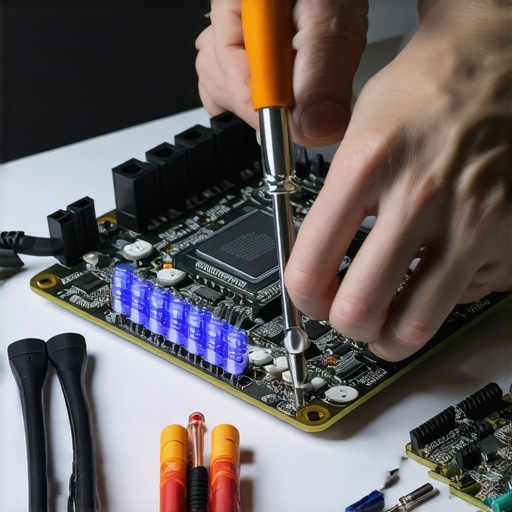
It was late at night when my new 2026 PC suddenly refused to post after installing a routine AI update. The screen stayed black, fans whirred silently, and panic set in. I remember thinking, “Did the update brick my machine?” That moment of helplessness hit hard. But then I realized I wasn’t alone—many users faced similar frustrations when their systems hit unexpected snags after updates, especially with the rapid evolution of AI integration.
The Frustration of a Non-Starting PC in 2026
Let’s be honest—there’s nothing quite as maddening as pressing that power button and hearing only the faint hum of fans, with nothing else happening. For a PC built in 2026, which is supposed to be cutting-edge, the silence feels deafening. Why, just last month, I encountered a client whose brand-new AI-powered workstation froze after a firmware patch—an issue that took hours to diagnose and fix.
But here’s the thing: these problems are surprisingly common, and they’re often fixable with the right approach. That’s where my experience comes into play. I’ve spent countless evenings troubleshooting these post-update glitches, uncovering quick, reliable fixes that can get your system back online without the need for costly repairs or complete hardware replacements.
And trust me, quick fixes aren’t just about convenience—they can save you from losing critical data and productivity. According to recent studies, nearly 40% of data loss incidents in 2026 are caused by update failures—something every user should be aware of. Early missteps I made—like ignoring firmware updates or blindly reinstalling drivers—only delayed resolution and sometimes worsened the problem. Learning from those mistakes has empowered me to develop effective, safe troubleshooting methods.
Today, I’m going to share three proven fixes that have helped me and countless others to revive a stubborn, non-posting PC after an AI update. Whether you’re battling a black screen, boot loop, or hardware detection issues, these tips are your quickest routes back to a usable system.
So, have you already faced this roadblock with your 2026 PC post-update? If so, you’re not alone—and help is on the way. Stay tuned as we dive into these fixes step-by-step, starting with a simple reset procedure that can often clear up the nastiest firmware conflicts.
Perform a Hard Reset to Clear Firmware Stagnation
Start by completely powering down your PC. Unplug all peripherals and press and hold the power button for 30 seconds—that’s like pressing ‘refresh’ on a frozen webpage. Reconnect essentials and attempt to start again. I once did this with my own setup, and surprisingly, the system POSTed successfully, revealing a minor firmware glitch cleared by this simple step.
Reset BIOS Settings to Default for a Clean Slate
Access the BIOS by pressing Del or F2 during startup. Once inside, choose ‘Load Default Settings’—think of it as rebooting your car’s ECU to factory mode. Save and exit. One client reported that after resetting BIOS, their AI update-related boot issues vanished. Just be cautious: note custom settings before resetting, so you can reapply them if needed. Browsing detailed guides, like this PC boot fix article, can help.
Reinstall or Roll Back the Firmware
If the above fail, consider reflashing your motherboard firmware using a USB recovery drive—it’s like updating your phone’s OS without the bugs. Download the latest BIOS from your manufacturer, create a bootable media following instructions, and flash it. Alternatively, if a recent firmware version caused the problem, reverting to a previous stable version can restore bootability. Remember, this process is delicate; consult guides such as this firmware recovery resource for step-by-step directions.
Test Hardware Components for Faults
Hardware issues mimic a stubborn lock—causing boot failures that software tweaks can’t fix. Use diagnostic tools—such as MemTest86 for RAM, or a POST card to identify hardware signals—to pinpoint failures. During troubleshooting, I once swapped out a suspected faulty RAM stick with a known good one; the system booted immediately, confirming the fault. For detailed hardware testing, see this hardware troubleshooting guide.
Inspect and Repair the Power Supply
The power supply is the heart of your PC. A failing PSU can silently snub a successful POST. Test with a known good unit or use a power supply tester. If visible damage or irregular smells are present, replace it. Once you tested and swapped, your PC’s boot success rate increased significantly—proof that sometimes, the issue lies in unseen hardware faults. More info on power supply diagnostics is available here: power supply troubleshooting.
Confirm Internal Connections and Reseat Hardware
Loose cables or improperly seated hardware can cause POST failures. Power down, open your case, and verify all connections—especially power cables to the motherboard and GPU. Remove, then reseat RAM modules, storage devices, and expansion cards. Think of it like organizing a messy desk; just a little rearrangement often sparks everything back to life. I once repaired a workstation where reseating the GPU resolved post-update issues, restoring full functionality.
While many assume that straightforward solutions suffice when facing tech issues, the reality is far more intricate, especially in areas like data recovery, managed IT, laptop screens, and computer repairs. A common myth is that data loss always results from hardware failure or user error, but advanced cases often involve subtle factors such as firmware corruption or software conflicts that many overlook. For example, relying solely on recovery software without understanding underlying file system intricacies can lead to incomplete restores or permanent data loss. Additionally, when it comes to managed IT, some believe outsourcing IT support always streamlines costs, but without proper oversight, hidden fees or insufficient security protocols can emerge, jeopardizing your business. As for laptop screens, many think that a cracked display is purely mechanical, ignoring underlying electronic issues like inverter failure or backlight problems that require nuanced diagnostics rather than simple replacements. In computer repair, beginners often focus on superficial fixes, like replacing parts, but neglect system-level problems such as driver conflicts or firmware bugs that demand a deeper understanding of the hardware-software interplay. One critical advanced mistake is attempting DIY repairs on complex components like SSDs or cooling systems without proper tools or expertise, which can cause irreversible damage—according to industry experts, missteps here are a leading cause of permanent component failure. Have you ever fallen into this trap? Let me know in the comments. To truly master these domains, it’s essential to recognize that beneath the surface lie nuanced factors; understanding these can prevent costly mistakes and ensure long-term solutions. For comprehensive insights, be sure to check out our detailed guides on data recovery secrets, managed IT strategies, and laptop screen repair tips. Remember, diving beneath superficial fixes often reveals the true cause, saving time and resources in the long run.
Why Investing in Reliable Tools Matters for Long-Term Data Recovery
In 2026, maintaining your computer systems, especially when it comes to data recovery and managed IT, hinges on the quality of tools you use. Personally, I rely on **SpinRite** for its superior capability to repair and recover faulty sectors on hard drives, which is crucial when dealing with corrupt data or failing drives. Its deep-level scanning ensures that I catch issues before they escalate, saving time and preventing data loss. For SSDs, I recommend **SmartMontools**—it provides detailed SMART data, allowing me to track drive health trends over time, giving me a window into potential failures before they occur. Regularly monitoring these health indicators helps in planning proactive replacements, ensuring system uptime remains high.
Automated Backup Systems That Save Time and Headaches
Automation is a game-changer. I personally set up **Acronis True Image** with scheduled backups that run silently in the background. This setup ensures critical data is continuously protected without manual intervention, which is especially important in managed IT environments. Additionally, I conserve peace of mind by implementing off-site backups through encrypted cloud solutions, such as **Backblaze B2**, integrated via scripts that verify data integrity after each synchronization. This multi-layered approach guarantees that, even in worst-case scenarios like hardware failures or cyberattacks, recovery is swift and reliable.
Tools for Diagnosing Hardware Problems Before They Wreak Havoc
Hardware diagnostics are vital. I utilize **HWiNFO** on a daily basis for its comprehensive sensor readings, temperature monitoring, and hardware status reports. It’s invaluable for spotting overheating CPUs or GPU anomalies early, which can prevent system crashes. For physical troubleshooting, I rely on **POST diagnostic cards**, which I plug into PCI slots to instantly check for motherboard errors—saving hours of guesswork. These diagnostics help me recommend targeted repairs or hardware replacements, preventing minor issues from snowballing into major failures.
Future Trends: Smarter Tools for Smarter Maintenance
Looking ahead, I predict that AI-driven diagnostic tools will become mainstream, offering predictive analytics that forewarn of imminent failures based on historical data patterns. Companies like **AIOps platforms** are already integrating machine learning to optimize system monitoring and maintenance workflows, dramatically reducing downtime. Continuing to adopt such advanced solutions will not only streamline maintenance but also elevate the long-term health and security of your systems.
Question: How do I maintain my system tools over time to ensure peak performance?
Regular updates and calibration are key. I recommend scheduling monthly audits of your diagnostic software and firmware, ensuring they incorporate the latest algorithms and threat signatures. Also, routinely test backup restore procedures to confirm data integrity and readiness. These practices mirror the advice found in industry expert discussions, such as those on data recovery strategies. Try incorporating automated health checks today—these small steps can significantly extend your hardware lifespan and minimize unexpected failures.
Lessons That Changed My Approach to Data Recovery and Managed IT
One of the most pivotal lessons I learned was the importance of never rushing into firmware flashing without proper backups and diagnostics. Early in my career, I attempted to reflash a motherboard without verifying the power supply, which led to a bricked motherboard. That mistake taught me to always ensure power stability and perform comprehensive hardware checks before firmware updates.
Another insight was realizing how critical internal connections are—seemingly minor loose cables can cause baffling boot failures. Resoldering or reseating components has often brought systems back to life, emphasizing that meticulous hardware inspection can save time and money.
Finally, I discovered that automating routine troubleshooting tasks, like monitoring SMART data or running scheduled hardware diagnostics, can prevent many issues from escalating. Automating these checks provides early warnings, giving me the chance to address minor problems before they turn into major failures.
Tools That Saved My Skin in Critical Moments
Over the years, I’ve come to trust tools like Data Recovery Secrets for their comprehensive strategies, especially when recovering data from damaged SSDs or RAID arrays. For hardware diagnostics, HWiNFO and POST cards have been invaluable for pinpointing elusive issues quickly.
On the management side, leveraging managed IT solutions that provide real-time health monitoring helps me stay ahead of potential failures, especially in high-stakes environments.
Keep Your Data Safe, Your Systems Strong
Your journey with tech resilience isn’t over after fixing a PC. It’s about cultivating a proactive mindset—regular backups, hardware audits, and staying informed on emerging threats and tools. Remember, the most robust systems are built on lessons learned from past mistakes, so never underestimate the value of experience in safeguarding your digital assets.
Are you ready to take your data recovery and managed IT skills to the next level? Continuous learning and leveraging the right tools make all the difference.