

The timeline was frozen. Again. I stared at the little blue spinning circle of death while my 4K footage stuttered like a scratched DVD from 2004. My office PC, a standard-issue box meant for spreadsheets and emails, was gasping for air. I felt like a failure because I couldn’t even deliver a simple social media clip on time. That night, I stayed late, not to work, but to figure out why this ‘decent’ computer was acting like a glorified calculator. I realized that most office setups aren’t built for the heavy lifting of video, but you don’t need a Hollywood budget to fix it. Today, I am going to show you how to turn that sluggish office rig into a video editing beast without begging the accounting department for a new PC.
Your GPU Is the Secret Weapon You Are Not Using
For a long time, I made the classic rookie mistake of thinking a faster CPU was the silver bullet for everything. I spent weeks researching i7s and i9s while my actual problem was much simpler. If you have ever looked at how to identify a failing motherboard before it stops working, you know that parts need to talk to each other efficiently. In the world of video, your graphics card does the heavy lifting for rendering effects and playback. Even a modest dedicated GPU can take the load off your processor. It is the same logic behind the hardware upgrade that stops your browser from crashing with too many tabs—it is about giving your system the specific breathing room it needs for the task at hand.
Is upgrading an office PC actually worth the headache?
You might be thinking, ‘Why should I not just buy a new Mac and call it a day?’ I get it. I used to think that way too, until I realized that a $150 part could save me $2,000. According to the hardware experts at Puget Systems, adding even a mid-range NVIDIA card can improve live playback performance by over 40% in applications like Premiere Pro. I learned this the hard way after I wasted a weekend reinstalling Windows three times, thinking it was a software bug. If you are just starting out, checking out computer repair for beginners-avoid costly mistakes is a great way to build your confidence before you open the case. Have you ever had your computer freeze right as you were about to hit ‘Export’ on a big project? Tell me I am not the only one who has almost lost their mind over a progress bar that has not moved in twenty minutes! [image placeholder]The first thing I did was crack open the side panel and look at the RAM slots. Most standard office PCs ship with 8GB, which is barely enough to run a few browser tabs, let alone a demanding program like Premiere Pro or DaVinci Resolve. Think of RAM as your physical desk space. If the desk is tiny, you can only work on one small paper at a time. To edit high-definition video, you need a massive workbench. I bumped my machine to 32GB, and the improvement was instant. This is essentially the same hardware upgrade that stops your browser from crashing with too many tabs, but scaled up for creative work.
How to Swap RAM Without Breaking Anything
First, you must ground yourself. Static electricity is a silent killer for electronics. You do not need a fancy wrist strap; just touch a metal part of the case while it is plugged in but turned off. Find the existing sticks, push down the plastic clips at the ends, and they should pop right out. Before you buy new modules, it is smart to test if your motherboard is dead or just sleeping to ensure the slots are actually functional and worth the investment.
Kill the Spinning Disk and Install an SSD
If your office PC still relies on a traditional Hard Disk Drive (HDD), you are essentially trying to drive a Ferrari on a muddy dirt road. I remember a project three years ago where I was editing a corporate sizzle reel off a cheap external drive. Every time I hit the spacebar to play, I heard a faint, rhythmic clicking sound when you open files. Within ten minutes, the software locked up and I lost two hours of color grading. That was the day I realized that mechanical drives have no place in a modern video workflow. Upgrading to an NVMe SSD is the single biggest speed boost you can give yourself. 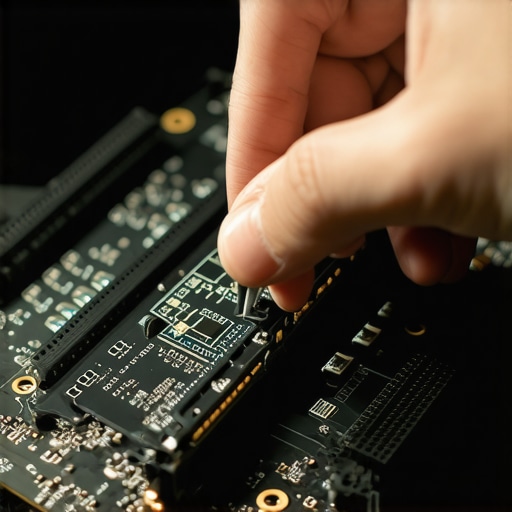
The Performance Jump from NVMe Technology
NVMe drives plug directly into the motherboard and can be up to 35 times faster than an old-school platter drive. Even if your machine is a few years old, you can learn how to upgrade the SSD in a laptop that has a soldered primary drive or a desktop with limited slots using an adapter. If you are worried about losing your current files and programs, the easiest way to clone a failing hard drive to a new SSD will save you from the nightmare of reinstalling every single application from scratch.
Stop the Thermal Throttling From Killing Your Speed
You can have the most expensive parts in the world, but if they get too hot, they will automatically slow down to protect themselves from melting. This is the sign your cpu is thermal throttling and slowing down your work. I once worked on an office rig that was caked in three years of cubicle dust. The fans were spinning so fast it sounded like a jet engine, yet the playback was stuttering every five seconds. Dealing with the fix for a noisy laptop fan that sounds like a jet engine often applies to desktops too—clean the dust out with compressed air and ensure your internal cables aren’t blocking the airflow. If your computer still feels sluggish after these physical upgrades, you should how to check if your hard drive is about to fail using s-m-a-r-t-data to rule out a dying component before you commit to a long render.Most professionals assume that as long as they have a cloud folder, their work is safe. This is a dangerous misconception. In my experience, relying on a standard sync service is not a recovery strategy; it is a recipe for disaster. If a file becomes corrupted or is accidentally deleted, the cloud syncs that error across all your devices instantly. This is precisely why your business backup plan is actually just a sync plan and not a true fail-safe. True data security requires versioning and off-site air-gapped copies.
The Ghost in the Machine That Software Updates Cannot Fix
We often default to thinking every stutter or crash is a Windows or Adobe bug. I have seen editors waste days reinstalling drivers when the actual problem was a failing component. Learning how to spot a hardware failure masquerading as a software bug is the difference between a ten-minute fix and a week of lost billing. For instance, a flickering display is rarely just a driver issue; it is often the hidden reason your laptop screen brightness keeps flickering related to the physical cable inside the hinge.
Why do SSDs still fail even without moving parts?
While mechanical drives have obvious failure points, SSDs have a silent killer: write endurance. According to a multi-year study by Backblaze, while SSDs are generally more reliable than HDDs, they exhibit a distinct ‘wear-out’ phase after a certain volume of data is written. For a video editor churning through terabytes of 4K cache files, you might be hitting that limit faster than you think. You must watch for the sign your ssd is reaching its write limit and about to die to avoid an unrecoverable crash. 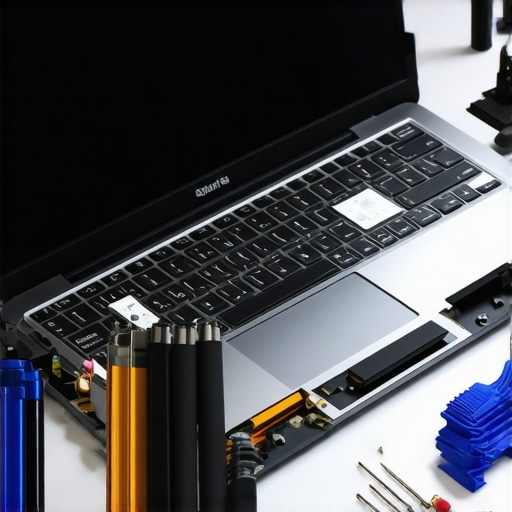 One major ‘trap’ people fall into is thinking Managed IT is just for fixing broken printers. In reality, managed it strategies to keep your business secure in 2025 involve proactive hardware monitoring that spots these failing SSDs weeks before they fail. Finally, never attempt to open a clicking hard drive yourself. This is the mistake that makes your backups completely useless. Without a cleanroom, you are essentially sandpapering your data with dust. If the drive is dying, consult data recovery secrets expert techniques to save your files fast rather than trying a DIY ‘hack’ you saw on YouTube. Have you ever fallen into this trap? Let me know in the comments.Now that you have the hardware in place, the real challenge begins: keeping it that way. I have seen too many people build a powerhouse only to watch it crumble because they ignored the environment. Heat is your biggest enemy. If you start hearing the fix for a noisy laptop fan that sounds like a jet engine, it is often a sign that dust has already started insulating your critical chips. I make it a point to use a canister of compressed air every three months. It sounds tedious, but it is how I have managed to how to extend the life of your office pcs by three years without a single major component failure.
What is the best way to keep this machine running smoothly?
Beyond the physical cleaning, you need a software-level maintenance plan. I personally use a combination of automated cleanup scripts and manual checks of the operating system integrity. Sometimes, a simple driver update can cause havoc, and knowing how to fix a blurry laptop screen after a driver update can save you a whole morning of frustration. I also recommend checking your visual setup regularly. For desktop setups with external monitors or laptops, using laptop screen repair diy tips for clearer displays ensures you are not straining your eyes while color grading that 4K footage. #IMAGE_PLACE_HOLDER_D# According to technical documentation from the Backblaze Drive Stats reports, drive failure rates tend to climb significantly after the four-year mark, even for high-end SSDs. This is why I predict that within the next few years, we will see deep-learning AI monitors integrated into motherboards that predict component failure with 99% accuracy before the user even notices a stutter. Until then, you need to be your own tech lead. As your workflow scales and you perhaps start hiring other editors, you will realize that DIY maintenance is not enough. You will need effective managed it solutions for growing companies to handle the permissions, security, and hardware rotations for a whole team. And please, do not just trust the cloud. Experience has taught me why your business needs a local backup even if you use the cloud—it is all about recovery speed. Downloading a 500GB project file from a remote server takes hours, but pulling it from a local NAS takes minutes. I challenge you to run a full diagnostic on your primary drive today using a S.M.A.R.T. utility. If you see even one ‘reallocated sector’ count, do not wait for the click of death; start your migration immediately.
Hard Lessons from the Rendering Trenches
After years of tinkering with hardware, I have realized that the biggest bottleneck isn’t always the part you expect. Often, we chase high CPU clock speeds when a simple RAM upgrade or a better cooling solution would have solved the stuttering. I also learned that sound is your best diagnostic tool; if you hear something off, you need to be troubleshooting common computer repair issues effectively before you lose a day’s work. Most importantly, do not wait for a total blackout to respect your data. If you are starting to see errors, checking out data recovery secrets expert techniques to save your files fast can be a literal lifesaver. Finally, never underestimate the power of a fresh operating system install once your new hardware is in place; it clears the ‘digital cobwebs’ that no upgrade can fix.
The Gear and Guides I Rely On Daily
I do not just wing it anymore. I rely on specific resources to keep my machine in top shape. First, I always keep a S.M.A.R.T. monitoring tool active to watch my SSD health; it is the only way to catch a failing drive before it takes your projects with it. Second, for visual accuracy, I use laptop screen repair diy tips for clearer displays even on my external monitors to ensure my color grades are spot on. Finally, as my business grew, I looked into how managed it can elevate your business security in 2025 because I realized I could not be the lead editor and the IT guy forever. These professional tools provide the peace of mind needed to focus on the creative side of video editing.
Take Your Workflow Back Today
Upgrading your office PC for video editing does not have to be a terrifying leap into the unknown. It is a series of small, calculated moves that transform a frustrating experience into a creative one. You have the knowledge now to swap RAM, install an SSD, and manage your thermals like a pro. Do not let that spinning blue circle dictate your creative output anymore. The power to create high-end content is already sitting on your desk; it just needs a little help to find its voice. Have you ever had a hardware failure strike right before a major project deadline? Let me know in the comments below!