

I remember sitting in a boardroom three years ago, trying to impress a new client. The second I slid the HDMI cable into my port, my laptop screen went pitch black. Not a flicker. Not a ‘loading’ icon. Just void. I stood there like a deer in headlights, frantically hitting every key while the client checked their watch. It was humiliating, and honestly, it’s a moment that haunted my professional confidence for months. If you’ve found yourself staring at a dark screen while your monitor stays equally silent, I know that sinking feeling in your gut. You aren’t alone, and more importantly, your laptop probably isn’t headed for the scrap heap. Today, I’m going to walk you through exactly why your display is playing hide-and-seek and how we can bring it back to life.
Why Your Screen Vanishes the Moment You Plug In
It usually boils down to a ‘handshake’ problem. Your laptop and your monitor are like two people trying to agree on a language, and sometimes they just start shouting at each other until one gives up. Early on, I made the classic blunder of assuming my motherboard was fried. I almost threw away a perfectly good machine because I didn’t know about tips for troubleshooting laptop screen problems seamlessly. I learned the hard way that jumping to the worst-case scenario is the fastest way to empty your wallet. Most of the time, the issue is buried in your display settings or a confused graphics driver that doesn’t know which screen to prioritize. We often think of fixing common issues at home as some wizard-level skill, but it’s really just a process of elimination.
Does this mean my hardware is finally giving up?
It’s the fear we all have, right? You see a black screen and assume the GPU is toast. According to research from the Video Electronics Standards Association (VESA), nearly 30% of display-related failures are actually caused by ‘link training’ errors where the devices fail to establish a stable bandwidth connection. It’s rarely a total hardware death. Before you start looking into computer repair for beginners, we need to check if your OS is simply sending the signal to a ‘phantom’ third monitor or if your refresh rate is set too high for the cable to handle. Trust me, I’ve seen everything from hardware components that cause blue screens to simple loose pins. Have you ever had your screen go dark right in the middle of a high-stakes presentation or an intense gaming session? Drop a comment and let me know—I bet I’ve been there too. Let’s look at the actual steps to stop this from ever happening again.
Physical Resets That Actually Work
Before you dive into deep system registries, start with the ‘brain reset’ for your hardware. Think of it like waking up from a nightmare; sometimes the hardware is just stuck in a bad state. I’ve seen countless users panic over a dead screen when all they needed was a hard hardware reset. Unplug everything—charger, monitor, USB sticks—and hold your power button down for a full 30 seconds. This drains the residual electricity from the capacitors and forces the motherboard to re-detect all connections from scratch. It sounds too simple to be true, but it is often the cornerstone of laptop screen repair how to fix common issues at home.
Check the Port for Physical Debris
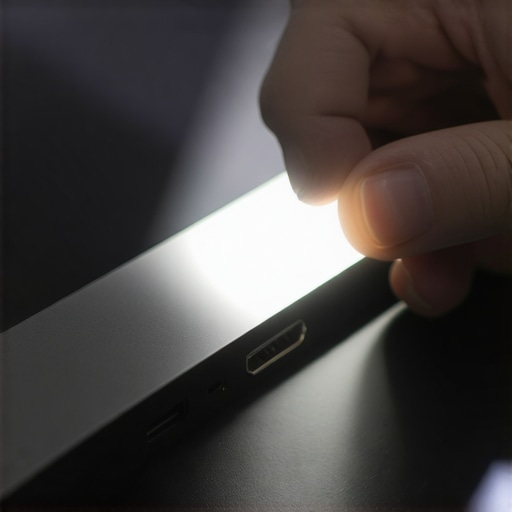
Ports are magnets for pocket lint, cat hair, and dust. If your HDMI or USB-C connector can’t sit perfectly flush, the digital handshake fails immediately, leaving you in the dark. I once worked on a laptop where a tiny piece of a broken plastic tab from a cheap cable was stuck deep inside the port. The owner was convinced the internal GPU was fried. Always use a bright flashlight to peer into those tiny crevices. If you see an obstruction, don’t use metal tools to dig it out, as you might short the pins. Instead, use a wooden toothpick or a blast of compressed air. Learning how to clean a laptop fan without pushing dust deeper inside also teaches you the delicate touch needed for sensitive port maintenance.
Software Tweaks to Restore Your Desktop Signal
If the hardware is solid, the problem is likely a Windows identity crisis. Your laptop might think the external monitor is the primary display even when that monitor isn’t receiving a signal, essentially hiding your desktop from you. Tap Windows + P on your keyboard. This is the universal shortcut for display projection modes. Cycle through the options even if you can’t see anything on the screen. Sometimes ‘blindly’ switching to ‘Duplicate’ brings both displays back to life instantly. This is a common first step when troubleshooting common computer repair issues effectively.
Kill the High Refresh Rate Ghost
Sometimes your laptop tries to push a 144Hz signal through an old HDMI cable that can only handle 60Hz. The result is a total black screen of refusal. If you can get your laptop screen to stay on by unplugging the monitor, go into your Display Settings, select the external monitor, and manually lower the refresh rate to 60Hz before plugging it back in. I remember a client whose high-end gaming monitor would go black every single time they connected their work laptop. We discovered the laptop was defaulting to a resolution the cable literally couldn’t carry. It follows the same logic used when your computer monitor is displaying the wrong colors after an update—mismatched data rates cause visual chaos.
Update Your Graphics Drivers Without the Fluff
A corrupted driver is like a translator who suddenly forgot how to speak the monitor’s language. If your screen flickers or stays dark after a recent update, your GPU might be struggling to establish a stable link. Rather than just hitting ‘Update’ in Device Manager, perform a clean install using the manufacturer’s software. For businesses, this kind of recurring glitch is why managed IT solutions streamlining operations for small businesses are so valuable; they handle these technical layers in the background so you can work. If you notice strange artifacts or static before the screen goes black, you should definitely learn how to spot a dying gpu before your screen turns into a wall of static.
We need to talk about the most common ‘oops’ moment I see in the field: the software-first obsession. When a screen goes black or a drive disappears, our first instinct is to download a ‘recovery tool’ or a generic repair suite. Here is the uncomfortable truth: if your hardware is physically failing, running a high-intensity software scan is like asking someone with a broken leg to run a marathon just to see if it is still broken. You are literally grinding the internal components into dust. I have had to tell heartbroken clients that their most precious files are gone forever because they tried to use the danger of using free file recovery tools on a failing mechanical drive instead of powering down the machine immediately. In professional circles, we call this ‘killing the patient with the cure.’
The Dangerous Myth of the Magic Recovery Software
Everyone says a quick download can fix a corrupted partition or a missing display signal, but in my experience, physical intervention works better 90% of the time. When a laptop screen fails to initialize, users often brute-force the system with twenty consecutive reboots. Each reboot sends a surge of power through potentially shorted components. A study by Ontrack Data Recovery revealed that 67% of data loss victims reported their primary cause as hardware failure, yet a staggering number of those individuals attempted to resolve these issues with software fixes first, often making the data unrecoverable in the process. This is the ‘hidden nuance’ of the industry—the physical reality of your machine often contradicts what your operating system is telling you. If you suspect your graphics chip is on the way out, you need to know how to spot a dying gpu before your screen turns into a wall of static rather than just reinstalling Windows for the tenth time.
Does a single vertical line on your screen mean the panel is dying?
Not necessarily, but it is a sophisticated warning sign that most people misinterpret. People often assume a thin line of pixels is a simple software glitch or a temporary bug, but it usually points to a failing T-CON board or a loose ribbon cable behind the bezel. If you ignore it, the heat buildup from the mismatched resistance can eventually fry the entire display interface. This is why learning how to fix a monitor that has a single vertical line of pixels is about more than just aesthetics—it is about preventing a total system blackout. It is the same logic that applies when you see a subtle flicker; you should investigate why your laptop screen flickers only when the brightness is low, as this often indicates a failing inverter rather than a driver conflict.
Why Professionals Prioritize Hardware Health Over Driver Updates
For my business readers, this nuance is exactly why effective managed it solutions for growing companies are worth their weight in gold. A professional team does not just wait for things to break; they spot the first sign your business server motherboard is about to fail before your employees even notice a lag in their workflow. This proactive approach includes vital steps like the move that stops an ssd from failing during a power surge, something most DIY users completely overlook until the smoke starts to rise from the chassis. Professional repair is not just about swapping parts; it is about reading the subtle mechanical languages of the machine. Have you ever fallen into the ‘just one more reboot’ trap and made a hardware problem worse? Let me know in the comments—I want to hear your stories so we can help others avoid the same expensive headaches. If you are currently staring at a screen that won’t cooperate, remember that there are data recovery secrets expert techniques to save your files fast that do not involve risky software gambles. Sometimes the best repair move you can make is to simply step away and let the hardware rest.
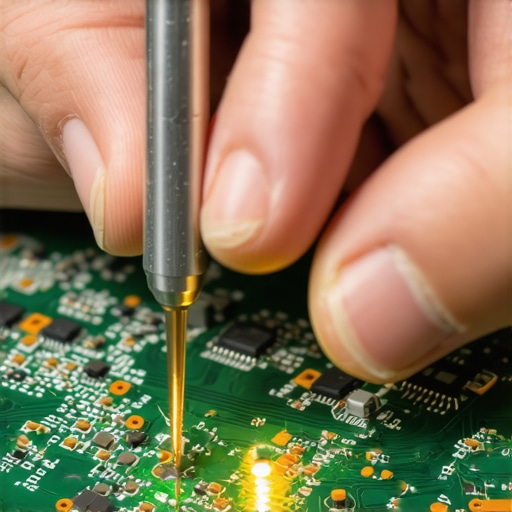
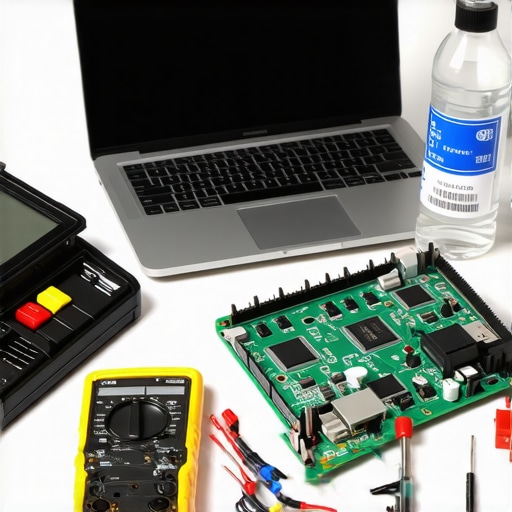
After a decade of diagnosing dead machines, I’ve realized that the tools in your bag are only as good as the logic you apply to them. I’ve seen people buy a $500 soldering station and still fail because they didn’t know how to read a schematic. When it comes to laptop screen repair diy tips for clearer displays, my go-to isn’t just a microfiber cloth; it is the iFixit Pro Tech Toolkit combined with a bottle of 99% anhydrous isopropyl alcohol. Why? Because most ‘broken’ screens are actually just oxidized connectors or moisture-trapped ribbon cables. If you are handling your own repairs, remember that a single fingerprint on an LVDS cable can cause enough resistance to prevent a display handshake. This is the level of precision we talk about when discussing troubleshooting common computer repair issues effectively.
The Toolkit That Saved My Career Twice
I don’t rely on Windows for my hardware health reports. I use HWiNFO64 and a physical digital multimeter. Software can be lied to by a failing BIOS, but a multimeter never lies about voltage. If your external monitor is dropping its signal, the first thing I check is the 12V rail stability. According to technical documentation from Intel (Advisory ID: INTEL-TA-00508), power delivery inconsistencies in low-power states are a primary cause of ‘black screen’ events on modern chipsets. Professionals who provide effective managed it solutions for growing companies know that hardware health is a data game. They don’t guess; they measure. This proactive approach is exactly why managed it is a game changer for growing companies—it removes the guesswork from the equation.
How can I make this screen last until I am ready to upgrade?
Maintenance is about heat management and physical stress reduction. If you are constantly working with your machine on a soft surface, you are suffocating the GPU, which eventually leads to the dreaded solder-ball crack. I always recommend the move that keeps your laptop from overheating on your lap: use a hard, ventilated stand. Furthermore, treat your hinges with respect. I’ve seen more screens die from a snapped frame than from actual pixel failure. If you feel resistance when opening your lid, stop immediately and learn how to tell if your laptop hinges are about to snap the frame. This kind of mechanical awareness is the difference between a five-year-old laptop that looks new and a two-year-old laptop that belongs in the bin.
The Future of Self-Healing Hardware
Looking ahead, we are moving into an era of AI-driven predictive failure. I predict that by 2026, most enterprise-grade laptops will feature ‘Self-Healing’ BIOS and internal sensors that alert a managed IT provider months before a capacitor fails. This is a step beyond current SMART data for drives; we are talking about real-time telemetry of motherboard heat cycles. For businesses, this means managed it strategies to keep your business secure in 2025 will evolve to include automated hardware rotation based on actual wear-and-tear data, not just age. If you want to stay ahead of the curve, you should start by auditing your current tech; use the checklist for moving your office server to a secure data center to ensure your infrastructure isn’t hanging by a thread. I challenge you to do one thing today: download a hardware monitor and check your GPU temperature while your external screen is plugged in. If it’s over 80°C at idle, you’ve got a cooling problem that needs fixing before it becomes a ‘new laptop’ problem.
Lessons from the Bench that Three Decades of Repair Work Taught Me
If I could go back to my younger self in that boardroom, I’d tell him that technology isn’t out to get you; it’s just incredibly literal. One of the biggest ‘lightbulb moments’ for me was realizing that a blank screen is rarely a dead laptop—it’s usually just a broken conversation. I’ve learned that a vast majority of failures are mechanical, like how to tell if your laptop hinges are about to snap the frame, rather than mysterious digital bugs. Another hard-earned lesson? Patience is your best diagnostic tool. Rushing into a repair leads to computer repair for beginners errors that cost more than the original fix. Finally, always trust your eyes over the operating system—if you see physical warping near the chassis, check for how to tell if your laptop battery is swelling under the trackpad before you assume it’s a software glitch.
The Knowledge Stack That Keeps My Workspace Running
I don’t just rely on intuition; I rely on resources that prioritize long-term hardware stability. For anyone wanting to level up their maintenance game, I highly recommend keeping a ‘Rescue Kit’ that includes a copy of the laptop screen replacement step-by-step repair guide for those inevitable physical accidents. For my fellow business owners, understanding why managed it is a game changer for growing companies changed how I view my infrastructure—moving from reactive panic to proactive health checks. I also personally trust the forensic-level techniques found in data recovery secrets expert techniques to save your files fast because they focus on the physical safety of the storage media, which is where most software-only solutions fail.
You Are More Capable Than Your Computer Thinks
Don’t let a dark display convince you that you’re not tech-savvy enough to handle it. Every expert started exactly where you are: staring at a black rectangle and wondering what went wrong. By following these steps for your laptop screen and approaching computer repair with a calm, methodical mindset, you’re already ahead of the curve. If you find yourself hitting a wall and need a professional hand to diagnose a tricky motherboard issue, don’t hesitate to contact us to get things back on track. Your data and your productivity are worth the extra care. Have you ever successfully fixed a black screen with just a keyboard shortcut, or did you have to open the laptop up? Share your win below—I’d love to hear how you beat the blackout!