

I walked into the office at 7:00 AM, the smell of burnt coffee already in the air, but there was something else—a faint, metallic tang that didn’t belong. I checked the rack. Everything looked fine. The green lights were blinking, the fans were humming, and I went back to my desk. That was my first mistake. I assumed that because the server was up, the server was healthy. It wasn’t until the random reboots started—the kind that leave no error log and happen right in the middle of a payroll run—that I realized I was in trouble. By then, the capacitors were already bulging. If I had just looked closer, I could have avoided a catastrophic failure. [image_placeholder]
The Subtle Scent of a Melting Mainboard
We often think of server failure as a dramatic event—a loud pop, a puff of smoke, and total darkness. But in my experience, the motherboard usually tries to warn you weeks in advance. It starts with the little things. Maybe your system clock starts losing time, or you notice that why your office server is making a loud buzzing noise every morning has changed its pitch. These aren’t just quirks; they are the early ripples of a coming storm. I once ignored a series of blue screens of death thinking it was just a buggy driver update, only to find out later that the voltage regulators on the board were physically cooking themselves.
According to research from Gartner, the average cost of IT downtime is roughly $5,600 per minute, which is enough to put a serious dent in any small business budget. That is why spotting these signs early isn’t just about maintenance—it is about financial survival. Today, I want to walk you through exactly how to spot these hardware hiccups before they turn into a full-blown emergency. Have you ever noticed your server doing something weird that you just couldn’t explain?
Is My Server Just Being Moody or Is It Actually Dying?
It is easy to be skeptical. You might think, My server is just a few years old, of course it is a bit slow. But there is a massive difference between age-related slowdown and a failing heart. When the motherboard begins to degrade, it affects everything from data integrity to peripheral connectivity. I have seen cases where companies spent thousands on data recovery secrets every business should know today simply because they didn’t realize their board’s SATA controller was intermittently dropping the connection to the drives.
The first real red flag is often how to fix a desktop pc that turns on but gives no beep codes during a cold boot. If your server is hesitant to start, or if it requires a double-tap of the power button to get going, you are living on borrowed time. This is the moment where you need to decide if you are going to proactively manage the situation or wait until you are forced into managed IT strategies to keep your business secure in 2025 because your local hardware finally gave up the ghost.
I remember a law firm that called me in a panic because their database kept corrupting at the worst possible times. They had just moved into a new office, and the server was tucked into a tiny, unventilated closet. When I opened the chassis, the heat hit me like an oven door. I didn’t need a diagnostic tool; I just looked at the capacitors. Two of them were leaking a brown, crusty fluid. That was it—game over for that board. If they had followed simple computer repair for beginners avoid costly mistakes, they would have known that heat is the motherboard’s number one enemy.
Get Under the Hood Before the Smoke Starts
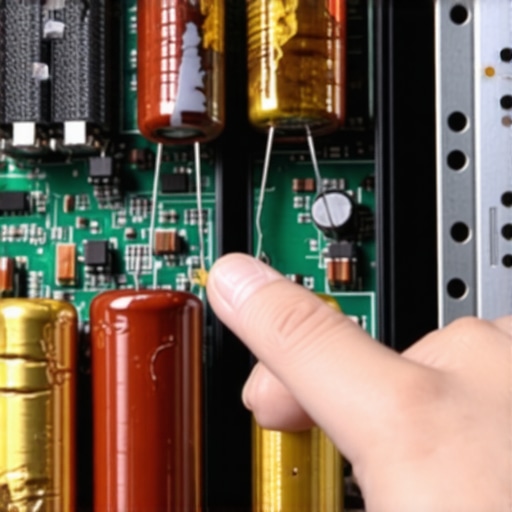
The first thing you need to do is a literal sniff test. It sounds primitive, but electrical components give off a very specific ozone smell when they are overvolting. Once you’ve ruled out the nose, you need to open the case. Look at the capacitors—those little cylindrical towers on the board. They should be perfectly flat on top. If they are rounded or showing any signs of leakage, your server is a ticking time bomb. This is often the hardware component that causes the most blue screens of death because unstable power delivery confuses the CPU and triggers immediate shutdowns to prevent a fire.
Don’t Let a Bad PSU Fry Your Business
People often blame the motherboard when the real culprit is the power supply. A failing PSU can send irregular voltage spikes that slowly degrade the delicate circuits on your board. I’ve seen this happen where a client bought a budget power unit for a high-end workstation, and six months later, the whole thing was toast. It’s why I always tell people that why a cheap power supply is the biggest threat to your office hardware. If your server reboots when you plug in a high-draw device or even just an external drive, your power delivery system is likely failing at the source.
Stop the Bleeding and Save Your Data
If you suspect the board is failing, your priority shifts from fixing to saving. Stop trying to reboot it just to see if it works one more time. Every time you power on a dying board, you risk an electrical surge that could wipe your storage drives. This is the stage where you need to know how to rescue files from a laptop with a damaged motherboard or a server with a fried controller. Pull the drives immediately, get them into a stable environment, and back them up. This is also a wake-up call for why your business needs a disaster recovery plan before the storm hits. If you had an image-based backup, a dead motherboard would just be a minor hardware swap rather than a week-long data recovery nightmare.
Isolate the Problem Like a Pro
When you’re dealing with intermittent freezes, start the strip-down method. Remove everything that isn’t required for the system to POST. Take out the extra RAM sticks, the secondary GPUs, and the PCIe cards. If the system stabilizes, you can add them back one by one. I once spent four hours troubleshooting a board only to find out it was a shorted USB header from a front-panel port. It’s a simple trick, but it’s one of the 3 hardware swaps that stop your office pc from freezing every hour that technicians use to pinpoint the failure point without buying expensive replacement parts first.
Everyone tells you that if your server or laptop is acting up, a good old ‘System Restore’ or a software patch will fix it. But here is the contrarian truth I have learned over fifteen years in the trenches: if your hardware is physically failing, software ‘fixes’ are actually your worst enemy. Most people assume that if they can still boot into Windows, the hardware must be fine. In reality, I have seen more data lost to people running aggressive disk utilities on a dying drive than to the actual hardware failure itself. When a motherboard’s voltage regulators start to waver, running a high-intensity scan like CHKDSK is like asking a marathon runner to sprint while they are having a heart attack. You are just accelerating the inevitable collapse. This is why the danger of using free file recovery tools on a failing mechanical drive is so high; they stress the hardware at the exact moment it needs a gentle touch.
Why Does Your Office PC Only Crash When You’re Barely Using It?
It sounds counterintuitive, but some of the most complex motherboard failures don’t happen when you are pushing the CPU to 100%. They happen when the system is idle. This is often due to ‘C-state’ transitions—where the processor drops its voltage to save power. A degrading motherboard often lacks the precision to handle these rapid voltage swings, leading to a hard freeze that leaves no error log. This is a classic ‘oops’ factor for many IT managers who keep looking for a software bug when the physical power delivery system is simply worn out. According to a study by the Ponemon Institute, the ‘human error’ factor in mishandling early hardware warning signs can increase the cost of a data breach by over $1 million, largely because of botched recovery attempts. If you are seeing these ghosts in the machine, you need to understand how to rescue files from a laptop with a damaged motherboard before the next idle-state crash becomes permanent.
Stop Running Stress Tests on a Dying Patient
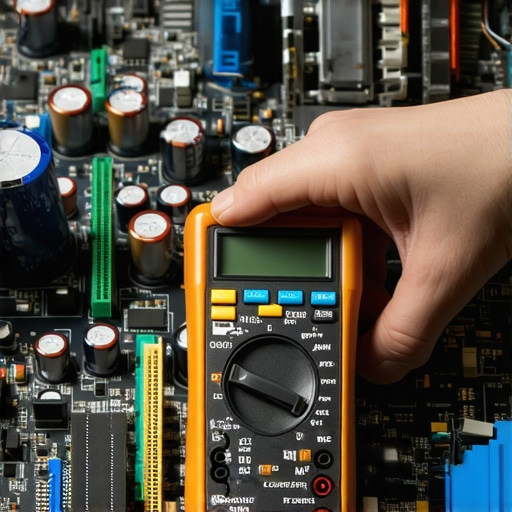
The biggest trap I see pros fall into is the ‘stress test’ cycle. They want to prove the hardware is bad, so they run Prime95 or MemTest86 for twelve hours. If the board was on its last legs, that heat cycle will finish it off. Instead of trying to break it, your focus should be on isolation. For instance, if you suspect a display issue, you should first check the real reason your laptop display looks pixelated and how to fix it rather than assuming the GPU is fried. The same goes for connectivity; sometimes the reason your office printer keeps losing its connection to the network is a failing southbridge on the server motherboard, not the printer itself. This level of nuance is exactly why your managed it service should be doing regular security audits that include hardware health checks. Have you ever fallen into the trap of trying to ‘fix’ a hardware problem with software and ended up making it worse? Let me know in the comments.
If you want to move from reactive panic to proactive peace of mind, you need to change your toolkit. I don’t just rely on the standard operating system Event Viewer anymore—it’s often too little, too late. My secret weapon in the field is a high-resolution FLIR thermal camera. I use it to scan the VRM (Voltage Regulator Module) area of every server motherboard during its maintenance window. If I see a component hitting 90°C while the system is at 20% load, I know that board is physically failing regardless of what any software diagnostic says. This level of physical inspection is exactly why your managed it provider should be doing quarterly audits that go beyond just checking for pending Windows updates. I also swear by specialized hardware like a physical USB write-blocker when performing data triage. Using the power of data recovery tools what you need to know correctly means preventing the operating system from writing ‘trash’ data or background indexing to a dying drive. This one tool can be the difference between a clean recovery and a permanent paperweight. For office workstations, I’ve found that the hardware upgrade that actually speeds up your daily workflow isn’t always a faster CPU; often, it’s just replacing a thermal-throttling motherboard or a dusty cooler that’s choking the system’s performance.
How do I stay ahead of hardware decay?
The real trick to long-term stability is setting a strict ‘replace-not-repair’ threshold. According to the Backblaze Drive Stats reports, which offer some of the most granular data on component reliability in the industry, failure rates tend to spike significantly after the four-year mark. I apply this same logic to motherboards and power supplies. If a board starts showing even one of the signs we’ve discussed—intermittent USB drops or a high-pitched coil whine—and it’s past its three-year warranty, I swap it. It is always cheaper to buy a $300 board today than to pay for emergency data recovery next month. Beyond just the big server components, don’t forget the peripherals. I’ve seen failing motherboards cause weird visual artifacts that look like screen damage, and knowing how to identify a dying backlight before your screen goes dark can save you from replacing a perfectly good GPU. You need a holistic view of your hardware health to maintain uptime. This level of oversight is exactly how managed IT can elevate your business security in 2025, shifting your team from putting out fires to preventing them from ever starting. Looking forward, I predict we are about to see a massive shift toward predictive telemetry. Imagine a BIOS that doesn’t just tell you a fan has failed, but uses on-board AI to analyze the electrical ‘noise’ of your capacitors and warns you three months before they leak. We are already seeing early versions of this in high-end data centers, and it’s only a matter of time before it hits the small business desktop. It will turn scheduled maintenance into predictive replacement, virtually eliminating hardware-based downtime. For now, I have a challenge for you: Open your server or main workstation today and do a physical ‘sniff test.’ If you smell anything like ozone, or if you see dust caked on the motherboard VRMs, don’t wait for the next crash. Pull your backups immediately and start looking for a replacement. Proactivity is the only real insurance in the IT world.
Hard Truths Learned From the Smell of Ozone
The biggest lie in IT is that if a server is currently running, it is healthy. I have learned that hardware degradation is a slow burn, not a sudden snap. One of my hardest lessons was realizing that [troubleshooting common computer repair issues effectively](https://computerrepairmasters.com/troubleshooting-common-computer-repair-issues-effectively) starts with just listening; if your fans are spinning faster for no reason, the hardware is already struggling. I have also seen too many people trust software reports over their own eyes. Relying on an OS to tell you the motherboard is dying is like asking a car if the oil is low while the engine is seizing—sometimes you just have to pull the dipstick yourself.
Gear That Actually Saves Your Bottom Line
To stay ahead of these failures, I rely on a specific set of tools that go beyond the basic screwdriver. First, I always keep a thermal camera handy to spot hot spots on voltage regulators before they pop. For those in the middle of a crisis, I recommend looking into [data recovery secrets expert techniques to save your files fast](https://computerrepairmasters.com/data-recovery-secrets-expert-techniques-to-save-your-files-fast) to ensure you have the right physical write-blockers and imaging software ready. I also swear by proactive lifecycle management. Utilizing [effective managed it solutions for growing companies](https://computerrepairmasters.com/effective-managed-it-solutions-for-growing-companies) allows you to track the age of every capacitor and PSU in your fleet so you can replace them on your schedule, not the hardware’s schedule.
Take Charge Before the Beeps Stop
You don’t have to be a master technician to save your business from a hardware catastrophe. It starts with a simple shift in mindset: stop treating your server like a permanent appliance and start treating it like a high-performance machine that requires regular inspection. By implementing [managed it strategies to keep your business secure in 2025](https://computerrepairmasters.com/managed-it-strategies-to-keep-your-business-secure-in-2025), you move from reactive panic to total control. Remember, a physical inspection today can prevent a week of downtime tomorrow. Have you ever smelled that faint metallic scent and hoped it was just your coffee maker, only to find out it was a dying motherboard? Let me know about your closest call in the comments below.