

It was 2 AM, and I was just about to hit save on a project I’d been grinding on for weeks. Suddenly, a scent like ozone and burnt hair filled the room. Then, a sharp pop. The screen went black. My heart sank because I knew exactly what that sound meant: my power supply had just committed suicide and likely took my expensive motherboard down with it. If you have ever smelled that magic smoke, you know the absolute dread that follows. I learned the hard way that computer repair for beginners often starts with respecting the one component that feeds everything else. Today, I am going to show you how to hear those whispers of failure before they turn into a full-blown hardware funeral. We are going to dive into the subtle signs that your PSU is on its last legs so you can act before you are stuck troubleshooting common computer repair issues effectively while staring at a dead machine.
The Night My Desktop Tried to Cook Itself
I’ll admit it: I used to be the guy who spent $500 on a GPU and then tried to save $50 by buying a generic, no-name power supply. It’s a classic rookie mistake. That cheap unit ended up failing under load, and when it went, it sent a surge through the 12V rail that fried my CPU socket. This is why I always tell my neighbors to watch out for the hardware component that causes the most blue screens of death because it’s usually the power delivery, not the software. One major red flag I ignored back then was a strange vibration. If you notice the reason your computer case is vibrating and making a hum is actually a struggling PSU fan, don’t just ignore it. According to testing data from Cybenetics, a leading authority in PSU efficiency and noise certification, excessive heat from fan failure is one of the top three causes of internal capacitor leakage in consumer power units. When those capacitors leak, your voltage ripples become unstable, and that is when the real damage to your motherboard begins.
Is a high-end power supply really worth the hype?
You might be wondering if those 80 Plus Gold or Platinum ratings are just marketing fluff. They aren’t. They represent the quality of the internal components that protect your PC from the wall outlet’s unpredictability. I’ve seen people lose entire workstations because they didn’t have a unit capable of handling a simple brownout. If you are currently dealing with a desktop pc that turns on but gives no beep codes, you might already be in the danger zone. Have you ever noticed your PC rebooting randomly while you’re gaming or editing video? Tell me in the comments, because that’s often the very first sign the power is dipping. We are going to fix that mindset today and get your rig stabilized.
How to Tell if Your PSU is a Paperweight
Before you start tearing your rig apart, you need to isolate the power supply. I remember one frantic Tuesday when a small business owner called me because their main workstation wouldn’t post. They were terrified they’d lost everything, but I used the ‘paperclip test’ to jump the 24-pin connector. It’s like hot-wiring a classic car; you’re manually telling the unit to wake up without a motherboard. If the fan spins, the PSU might be alive, but if it stays silent, you’ve found your culprit. This is a vital part of computer repair for beginners because it prevents you from buying parts you don’t need.
The risky paperclip trick that saves your sanity
To do this, you bridge the green wire (PS_ON) with any black ground wire. If the unit doesn’t turn on, it’s toast. However, just because it spins doesn’t mean it’s healthy. Sometimes it’s like a car engine that idles fine but stalls the moment you hit the gas. This is where troubleshooting common computer repair issues effectively gets tricky. You might need a digital multimeter to check if the 12V rail is actually pushing 12V. I once saw a unit pushing 11.2V; it was enough to light up the LEDs but not enough to boot the OS. #IMAGE_PLACE_HOLDER_B#
Stop Ignoring the Visual Warning Signs
If your PC is still ‘half-alive,’ open the side panel and look at the capacitors on the motherboard and inside the PSU (if you can see through the mesh). In my early days, I ignored a tiny bulge on a capacitor, thinking it was just a manufacturing quirk. Three days later, it popped like a firecracker. These components are like tiny buckets holding electricity; once they start to leak or ‘crown,’ your system’s stability goes out the window. This instability is often the hardware component that causes the most blue screens of death. If you are running a business, this is why why managed IT is a game changer for growing companies; pros catch these physical defects during routine audits before the smoke starts.
Spotting the leaking battery of the desktop world
A failing PSU doesn’t just kill itself; it can take your data with it. If a surge hits your SSD, you’ll be looking for data recovery secrets expert techniques to save your files fast. I’ve had to tell clients that their family photos were gone because a $40 power supply ‘sneezed’ on their hard drive. It’s a gut-wrenching conversation. If you notice your laptop screen backlight is actually failing or flickering, it’s often a sign that the internal power delivery is pulsing. Don’t wait for the ‘pop.’ If the fan is screaming even when you aren’t doing anything heavy, your unit is working overtime to compensate for failing internals. Check why your laptop fan is screaming even when you are not using it to see if it’s a heat issue or a power struggle.
I see it every week: a panicked business owner walks in with a laptop making a rhythmic clicking sound. They’ve spent the last six hours running every ‘Pro Recovery Wizard’ they could find online. Here is the uncomfortable truth that most software companies won’t tell you: if your drive is physically failing, every second it spins under a software scan is a second you are losing data forever. The actuator arm is likely scraping the magnetic platters, turning your precious family photos or client spreadsheets into literal dust. When you’re dealing with data recovery secrets expert techniques to save your files fast, the first rule is to stop the spin. According to industry data from Ontrack, mechanical failures account for nearly 30% of all data loss incidents, and these cases are almost never solvable by a simple download.
Why your recovery software might be killing your data
Everyone says that software can fix anything, but in my experience, the ‘oops’ factor of over-reliance on apps is what kills the most hardware. I once watched a client fry their entire logic board because they thought a BIOS-level fan control app could fix a physical obstruction in the cooling fins. If you are currently troubleshooting common computer repair issues effectively, you have to learn to trust your ears over your screen. If the machine sounds like a coffee grinder, no amount of software updates will fix it. This same logic applies to your display; if you see a flicker, you might think it is a driver issue, but how to tell if your laptop screen backlight is actually failing often comes down to the physical voltage being delivered to the inverter, not the OS settings.
#IMAGE_PLACE_HOLDER_C#
Should you trust a local shop or ship your drive to a cleanroom?
This is the question that separates the hobbyists from the pros. For simple logical errors, a local shop is fine. But for a clicking or dead drive, you need a ISO 5 Class 100 cleanroom environment. This is why Drive Savers remains the only choice for physically damaged drives; opening a drive in your living room introduces microscopic dust particles that act like boulders on the platter surface. Have you ever fallen into this trap of trying to ‘software’ your way out of a hardware nightmare? Let me know in the comments. I’ve been there, and the tuition for that mistake is usually a very expensive paperweight.
The $20 charger mistake that ruins your motherboard
Another nuance people miss involves the humble power brick. I constantly see people using generic, $20 universal chargers on their $2,000 workstations. These cheap units lack the filtering capacitors necessary to keep voltage ripple within safe limits. Over time, that noisy power degrades the VRMs on your motherboard until the system just stops posting. If you are responsible for a fleet, this is where effective managed IT solutions for growing companies pay for themselves. A pro wouldn’t just look at the OS; they’d audit the physical power environment. Reading the truth about using generic chargers on expensive business laptops could save your company thousands in hardware refreshes. It’s not just about the repair; it’s about the architecture of protection. If you are struggling with a machine that won’t behave, don’t just click ‘Update’—listen to what the hardware is actually telling you.
After years of fixing machines, I’ve realized that the difference between a five-year-old PC that runs like new and a one-year-old paperweight is usually found in the toolkit. I don’t just rely on ‘gut feelings’ or the Windows Task Manager anymore. I personally swear by CrystalDiskInfo for storage health and HWiNFO for real-time voltage monitoring. If I see a ‘Caution’ state on a drive’s Reallocated Sectors Count, I don’t wait for a crash. I treat it like a ticking time bomb. This is essentially the power of data recovery tools what you need to know—prevention is the best recovery. According to the 2023 Backblaze Drive Stats report, SSDs have a remarkably low annualized failure rate (AFR) of 0.9%, but when they fail, they often do so without the rhythmic clicking warnings of old-school HDDs. This makes software-based monitoring even more critical for your workstation’s longevity.
The tools I actually carry in my daily tech bag
For the physical side of things, I never leave home without my iFixit Pro Tech Toolkit and a high-quality digital multimeter. You’d be surprised how many ‘dead’ motherboards are just the result of a faulty CMOS battery or a blown fuse on the backlight circuit. If you’ve ever wondered how to tell if your laptop screen backlight is actually failing, a multimeter is the only way to be 100% sure. I’ve seen people spend hundreds on a new LCD panel when a $2 component on the board was actually the culprit. This is a core lesson in computer repair for beginners: verify the power before you blame the parts. 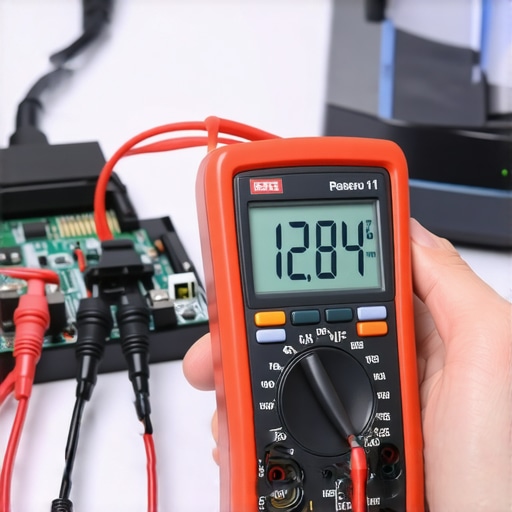
How do I maintain my system health over the long haul?
Maintenance isn’t just about software updates; it’s about airflow. Every six months, I use a can of compressed air and a small ESD-safe brush to clear out the heat sinks. You have to be careful, though; learning how to clean a laptop fan without pushing dust deeper inside is the difference between a cool machine and a jammed bearing. For my business clients, I take this a step further. We don’t just wait for things to break. This is why your managed IT provider should be doing quarterly audits. They look at heat maps of your server room and the SMART data of every drive in the fleet to swap out aging hardware before a Tuesday morning meeting turns into a disaster.
Scale your protection before your hardware fails
As you grow, you can’t be the person checking every laptop fan yourself. You need systems. I’ve seen small startups crumble because they treated their IT like a hobby. Implementing effective managed IT solutions for growing companies allows you to automate the health checks I’ve described here. Looking forward to 2025, I predict we will see AI-integrated BIOS that can predict a capacitor failure weeks in advance based on micro-fluctuations in power delivery. We are moving away from ‘fix it when it breaks’ toward ‘fix it before it knows it’s broken.’ If you want to get ahead of the curve, I have one advanced tip: download a hardware monitor today and check your 12V rail while running a heavy task. If it’s swinging wildly, replace that PSU now. It’s the cheapest insurance policy you’ll ever buy for your digital life.
The High Cost of Choosing the Lowest Bidder
If there is one thing I have seen destroy more businesses than malware, it is the ‘bargain’ component. I have watched five-thousand-dollar servers die because someone used a cheap power cable that didn’t meet the gauge requirements. When you are diving into computer repair for beginners, remember that the most expensive part is often the one that was too cheap to trust. Another big one? Never trust a drive that clicks. If you hear that rhythmic metallic ticking, shut it down immediately. This is one of the most vital data recovery secrets every business should know today to avoid permanent loss. It is much easier to replace a failing part than to reconstruct a lost database.
The Gear and Software I Trust with My Data
I don’t just guess when a system is failing; I use tools that provide hard data. For anyone serious about workstation maintenance, I recommend keeping HWiNFO64 open to watch your voltage rails and CrystalDiskInfo to monitor S.M.A.R.T. status. For those managing more than one machine, managed IT strategies to keep your business secure in 2025 are no longer optional—they are the baseline for survival. I also highly recommend the iFixit Pro Tech Toolkit for anyone attempting laptop screen repair DIY tips for clearer displays, as having the right specialized tools prevents cracked bezels and stripped screws. #IMAGE_PLACEHOLDER_E#
Secure Your Digital Future Starting Today
Building a resilient system takes time, but it saves you from the gut-wrenching moment of a total system failure. Whether you are swapping a PSU or implementing why your business needs a disaster recovery plan before you need it, every small step adds a layer of protection to your workflow. Computer repair is more than just fixing what is broken; it is about understanding the life cycle of your hardware so you are never caught off guard. Taking a proactive approach to your hardware health ensures that your business can scale without the fear of a sudden ‘magic smoke’ event. Have you ever ignored a strange computer noise only to regret it later? Let me know your story in the comments below.