

I remember sitting in my office at 2 AM, staring at a server rack that was blinking a rhythmic, mocking amber. My ‘expert’ consultant—the one I’d paid a hefty retainer to just three months prior—wasn’t answering his phone. Not that night, not the next morning, and honestly, never again. I was ghosted during a total system hardware failure. It’s a gut-punch that makes you question your business judgment and, more importantly, leaves your data at massive risk. If you have ever felt that sinking feeling when your help desk goes silent, you are not alone. Today, I want to share exactly how I stopped making these hiring blunders so you can protect your company from the same fate. [IMAGE_PLACEHOLDER]
Stop the Three-Month Disappearing Act
When I first started scaling my business, I made the classic mistake of hiring based on a flashy website and a low monthly price. I didn’t look for red flags in the service agreement that clearly signaled they were spread too thin. I wanted a quick fix for my tech headaches, but what I got was a professional ghost. The reality is that according to reports from industry leaders like CompTIA, nearly 40 percent of small businesses feel their IT providers are failing to meet basic expectations regarding responsiveness. This happens because most vetting processes are too shallow. You need to know if they are actually doing the physical work or if there is a sign your IT support company is outsourcing your help desk overseas, which often leads to that dreaded communication breakdown when things go south. I once hired a technician who promised the world regarding data recovery secrets, only to realize he had no long-term support structure. I was mesmerized by his ability to fix a single broken laptop, but I ignored the fact that he had no ticket system and no backup for himself. I thought that as long as they had a ‘certification’ logo on their footer, I was safe. That was my second big mistake. Many of those badges are just for passing a single test a decade ago. Now, I insist on seeing a live demonstration of their remote monitoring tools. If they can’t show you how they’ll monitor your office network battery backup or alert you to a failing drive before it dies, they aren’t ‘managing’ anything; they’re just waiting for you to call so they can bill you. When you don’t vet properly, you often find that your IT support costs are higher than they should be because you’re paying for ’emergency’ fixes that should have been routine maintenance.
Is it actually possible to find a consultant who stays?
It feels like a tall order, doesn’t it? You worry that every new hire will start strong and then slowly drift away as they find ‘bigger’ clients. But the secret isn’t in the specific software they use; it’s in the accountability they build into the contract from day one. Have you ever had an IT person simply stop responding right when a deadline was looming? Let me know, because I’ve been there, and it’s exactly why we need to change how we vet these partners. We are going to look at the hard questions you must ask to ensure your managed IT strategies actually keep you secure long-term and that your consultant is still there to answer the phone in month four, month six, and beyond.
Force the Technical Deep Dive Before Signing
To avoid the ghosting I mentioned earlier, you have to treat the interview like a stress test. An IT consultant without a standardized ticket system is like a restaurant without a kitchen order rail—eventually, your “order” for a server fix will get lost in the noise. I started demanding a live walkthrough of their documentation processes. If they can’t show me how your managed IT service should be tracking your software licenses, they definitely aren’t keeping an eye on your actual hardware health. I once sat in on a pitch with a local technician who seemed perfect on paper. I asked him to show me exactly how he would identify a failing motherboard before it took down the whole office. He gave me a vague answer about “testing everything.” I pressed him to show me a sample S.M.A.R.T. report and he couldn’t do it. That silence told me he wasn’t looking at the data; he was just guessing. I walked away, and three months later, I heard his only other big client lost a week of data because he missed a predictive failure. 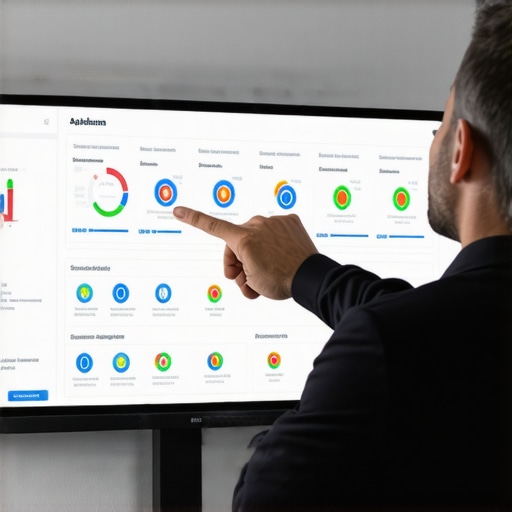
Verify Their Hardware Philosophy Early
You can tell a lot about a consultant by the hardware they recommend. If they are pushing you toward consumer-grade gear at the big-box store, run. I have a strict rule: never let a consultant tell you to buy the hardware part you should never buy used for your business, such as power supplies or primary storage. A pro knows that a cheap power supply is the biggest threat to your office hardware. Ask them how they handle proactive replacements. Do they have a system to check if your hard drive is about to fail using S.M.A.R.T. data, or do they wait for the clicking sound? If they aren’t monitoring these metrics, they aren’t a managed service; they are just a very expensive janitor for your data.
Audit Their Offboarding and Security Protocols
The most dangerous time for your business is when an employee leaves or when you fire your current IT guy. You need to know that your consultant has a ‘kill switch’ process. This means preventing former employees from locking you out of company devices. I learned this the hard way when a disgruntled manager changed the admin passwords on three critical laptops and we had to spend hours on expert data recovery techniques just to get back into our own files. Now, I ask every potential partner: ‘Who owns the passwords?’ If the answer is ‘we do,’ the meeting is over. You must own the keys to your kingdom. Your IT provider should be managing your domain renewals and security, but the primary account holder should always be you. This prevents the ‘hostage’ situation that many small businesses find themselves in when they try to switch providers. Furthermore, ask them about their backup verification. The mistake that makes your backups completely useless is never testing the restore. If they can’t show you a log of a successful test restore from the last 30 days, they don’t have a backup plan—they have a hope.
Most business owners think that moving every single byte to the cloud means their data is invincible. They assume that if a laptop dies or a server fries, the cloud will simply beam everything back like magic. But in my experience, relying solely on off-site storage is a slow, expensive trap during a real crisis. I have seen companies spend three full business days downloading a single terabyte of data over a standard office connection after a major crash. That is why I argue that your business needs a local backup even if you use the cloud. Without a local copy for instant recovery, you are not actually ‘managed’—you are just waiting in a long digital line for your own data. Have you ever fallen into this trap of over-relying on the cloud? Let me know in the comments.
Why does your shiny new cloud backup fail when you actually need it?
It is not just about the download speed; it is about the ‘Oops’ factor of data integrity. I recently consulted for a firm that lost weeks of critical work because their ‘automated’ backup was faithfully syncing corrupted, encrypted ransomware files over the clean versions. This is the mistake that makes your backups completely useless: assuming ‘sync’ is the same thing as ‘safety.’ To back this up, IBM Security has reported that organizations utilizing too many disconnected security tools actually rank lower in their ability to detect and respond to threats due to noise and alert fatigue. This ‘tool sprawl’ creates a smoke screen where you think you are protected because you are paying for five different services, but in reality, you are just paying for five different people to ignore the same blinking warning light.
Stop replacing laptop screens that are not actually broken
The same logic of deep vetting applies to your hardware repairs. I see people spot a screen flicker and immediately rush to book a laptop screen replacement. I have saved my clients thousands of dollars by identifying that the issue was actually a laptop screen that is flickering only on battery power due to a chipset power-saving setting, or perhaps just a loose eDP ribbon cable. It is vital for any serious business owner to learn how to spot a hardware failure masquerading as a software bug before opening the company checkbook. 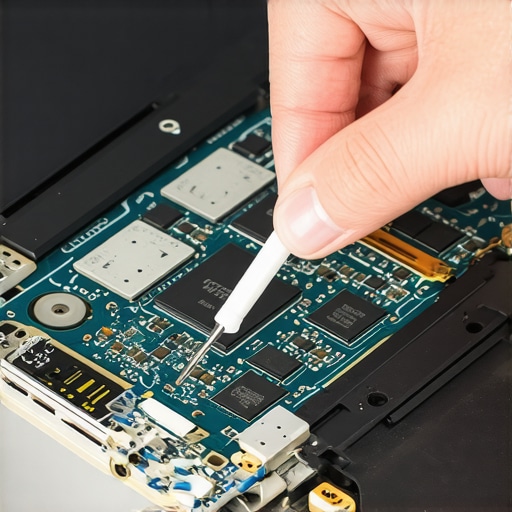 Understanding the power of data recovery tools and hardware diagnostics is no longer just for the IT department; it is a financial necessity to avoid being taken for a ride by a ‘pro’ who only knows how to swap parts instead of actually solving problems.
If you want to stop being at the mercy of a consultant’s schedule, you need a personal diagnostic toolkit. I do not mean a bag of screwdrivers—I mean the software that tells you the truth without the sugar-coating. For years, I have relied on tools like HWiNFO for real-time sensor data. It is exactly how I catch the sign your CPU is thermal throttling and slowing down your work before the system starts rebooting during a pitch. When a PC feels sluggish, I do not just blindly buy more RAM; I check for the specific hardware upgrade that stops your browser from crashing with too many tabs. Usually, it is a bottleneck you would not expect, like an old SATA cable or an overlooked firmware update. By having these tools ready, you transition from a passive victim of tech failures to an active manager of your assets.

How do I keep my office hardware alive for the long haul?
The secret to longevity is not some magic cleaning spray; it is consistent, data-driven monitoring. I have found that you can how to extend the life of your office PCs by three years simply by managing thermal loads and keeping the power delivery clean. This means investing in high-quality UPS units. If your server is directly in the wall, you are asking for a fried motherboard. I also recommend a monthly ‘BIOS audit.’ I have seen dozens of cases where a machine would not boot, and simply knowing how to fix a computer that wont go past the bios screen saved the company from a $200 service call. Maintenance is about preventing the ‘big bang’ failure by catching the small whimpers of dying hardware early. According to the comprehensive Backblaze Drive Stats reports, which track thousands of hard drives, failure rates begin to climb significantly after four years of constant use. This is why I advocate for a strict replacement cycle—do not wait for the crash; replace at the first sign of a S.M.A.R.T. error.
Predictive AI will soon replace the traditional help desk
Looking toward the future, I see a massive shift in how we handle effective managed IT solutions for growing companies. We are moving away from the ‘break-fix’ model entirely. Within the next few years, AI-driven ‘self-healing’ networks will be standard. These systems will detect the sign your office switch is failing and dropping connections and automatically reroute traffic while ordering a replacement part on your behalf. While that sounds like science fiction, the early stages of these managed IT strategies are already being implemented in enterprise environments today. To stay ahead, you should start by auditing your current infrastructure. I challenge you to download a basic S.M.A.R.T. monitoring tool today and check the ‘Health’ status of your primary workstation. If it is anything less than ‘Good,’ you have a ticking time bomb on your desk. Don’t wait—back it up and plan the swap now.
The Brutal Truth About Managed Services I Learned the Hard Way
After years of firefighting tech disasters, I realized that the best IT support is the kind you almost never have to call. Here are a few lightbulb moments that changed how I protect my company:
- Logs Over Logos: A consultant with a dozen certifications but no organized ticketing log is a liability. I now prioritize transparency in their workflow over the fancy badges in their email signature.
- Visibility is Key: If you only hear from your IT guy when things break, you are in a ‘reactive’ trap. A true partner provides monthly reports on hardware health and security patches before you even notice a slowdown.
- Documentation is Ownership: I stopped letting consultants keep our network passwords and configurations in their personal notebooks. If it is not documented in a shared, secure vault you control, you do not actually own your infrastructure.
- Value the ‘Boring’ Stuff: The most expensive mistakes I made involved ignoring computer repair for beginners avoid costly mistakes tips like basic cable management and dust control, which lead to premature hardware death.
The Gear and Resources That Actually Earn Their Keep
I don’t believe in buying every new gadget, but there are a few essentials that have saved my skin more than once. First, I always keep HWiNFO running on my main machines to track temperatures and voltage; it is the ultimate early-warning system. For storage reliability, I religiously check the Backblaze Drive Stats to see which hard drive brands are actually failing in the real world before I buy for the office. I also highly recommend learning how to audit your business IT spending without hiring an expert so you can spot where your money is being wasted on ‘ghost’ licenses or bloated service fees. Finally, always have a dedicated, high-quality UPS for every server—plugging directly into a wall outlet is just a gamble with your motherboard’s life.
Take Back Control of Your Digital Kingdom
You don’t have to be a computer scientist to run a secure, efficient business, but you do have to be an active participant in your tech strategy. Moving from a state of constant ‘tech-anxiety’ to a state of ‘managed-confidence’ starts with asking the hard questions today. Whether you are dealing with complex data recovery scenarios or just trying to keep the laptop screen from flickering on your remote team’s devices, remember that you are the boss of your hardware, not the other way around. Understanding how managed IT can elevate your business security in 2025 will put you ahead of the curve and keep your data safe while your competitors are still waiting for a call back from a ghosting consultant. Have you ever been ghosted by a technician right when your server started making that dreaded clicking sound? Let me know your story in the comments below.